
Wednesday, August 24, 2022
Conscientious objection in South Korea -- still an issue


Saturday, August 20, 2022
A duty to disobey?

Jurisdictional overreach in Pakistan?
 A recent report
in the Express Tribune of
Pakistan raises questions about the potential for jurisdictional overreach
under the military law of Pakistan. The issue arises in the context of an allegation
that Shahbaz Gill, leader of opposition political party Pakistan
Tehreek-e-Insaf, has incited mutiny in the Pakistani army. A member of the
Prime Minister’s office has suggested that Mr Gill should be tried by
court-martial for this offence. In this post I examine whether that is a
serious prospect under Pakistani military law and, if so, what international
law would have to say on the matter.
A recent report
in the Express Tribune of
Pakistan raises questions about the potential for jurisdictional overreach
under the military law of Pakistan. The issue arises in the context of an allegation
that Shahbaz Gill, leader of opposition political party Pakistan
Tehreek-e-Insaf, has incited mutiny in the Pakistani army. A member of the
Prime Minister’s office has suggested that Mr Gill should be tried by
court-martial for this offence. In this post I examine whether that is a
serious prospect under Pakistani military law and, if so, what international
law would have to say on the matter.
Under
section 31 of the Pakistan Army Act 1952, it is an offence for “any person
subject to this Act” to, inter alia, incite mutiny in the military
forces of Pakistan, or attempt to seduce a member of those forces from his or her
duty or allegiance to the Government of Pakistan. Pakistan is a state which,
like many members of the Commonwealth, has derived its military law from a British
root. In most such states, the limitation of jurisdiction to “any person
subject to this Act” would put an end to any speculation as to whether Mr Gill
could be tried by court-martial. He is not a member of the Pakistani armed forces
and nor does it appear that he has any particular connection with those forces.
Ordinarily, that would mean that he would not be subject to the Act. However,
the jurisdictional provision which defines who is subject to the Pakistan Army
Act (section 2) has been successively amended since the mid-1960s until as late
as 2017, to expand the jurisdictional ambit of the Act to quite a surprising
degree. Certain persons considered to be terrorists are subject to the Act
(section 2(d)(iii) and (iv)) as well as anyone, not otherwise subject to the Act,
who is accused of “seducing or attempting to seduce any person
subject to this Act from his duty or allegiance to Government”
(section 2(d)(i)).
In the article
in the Express Tribune, Colonel Inamul Rahiem, a retired officer of
Pakistan’s Judge Advocate General’s branch indicates that jurisdiction over a
civilian cannot in fact be exercised in these circumstances consistently with
the Constitution of Pakistan, and that there is Supreme Court authority to that
effect. It would be surprising if that were not so, given Pakistan’s
ratification of the International Covenant on Civil and Political Rights (ICCPR)
in 2010.
The
question of how the ICCPR and other international norms impact on the exercise
of military jurisdiction is canvassed in the Principles Governing the Administration
of Justice Through Military Tribunals, a soft law instrument which has evolved
over the last 20 years under the auspices of the United Nations; the most
recent consideration of the principles being a re-draft prepared at Yale University in 2018 by a group of experts including myself and a number of other
contributors to this blog. The issue we are looking at here is dealt with in
Principle 6:
“Military courts have no jurisdiction to try
civilians except where there are very exceptional circumstances and compelling
reasons based on a clear and foreseeable legal basis, made as a matter of
record, justifying such a military trial.
Those circumstances only exist, where:
(a) Such
a trial is explicitly permitted or required by international humanitarian law;
(b) The
civilian is serving with or accompanying a force deployed outside the territory
of the sending State and there is no appropriate civilian court available; or
(c) The
civilian who is no longer subject to military law is to be tried in respect of
an offence allegedly committed while he or she was serving as a uniformed
member of the armed forces or he or she was a civilian subject to military law
under paragraph (b).”
This
principle reflects the axiom that, in ordinary circumstances, only military
personnel should be subject to military law. However, it also recognises that
there are some very limited exceptions in which the application of military law
to a civilian would be compatible with international norms. The exceptions
permit a compatible reading of States Parties’ obligations under the ICCPR on
the one hand, and the Geneva Conventions on the other. However, none of the
exceptions appear to apply in the case of Mr Gill. It must be observed that any
attempt to use military law as hammer to crack the “nut” of political
opposition cannot fail to bring both the military jurisdiction and the State
itself into disrepute.
I suggest
that it might be timely for the Government of Pakistan to address the apparent
incompatibility between section 2 of the Pakistan Army Act 1952, the Constitution
of Pakistan and Pakistan’s international obligations.
Wednesday, August 17, 2022
Cases decided by the U.S. Court of Appeals for the Armed Forces on full opinion during the present Term of Court
 as of August 17, 2022. The Term ends on September 30.
Monday, August 15, 2022
"Milicogate"
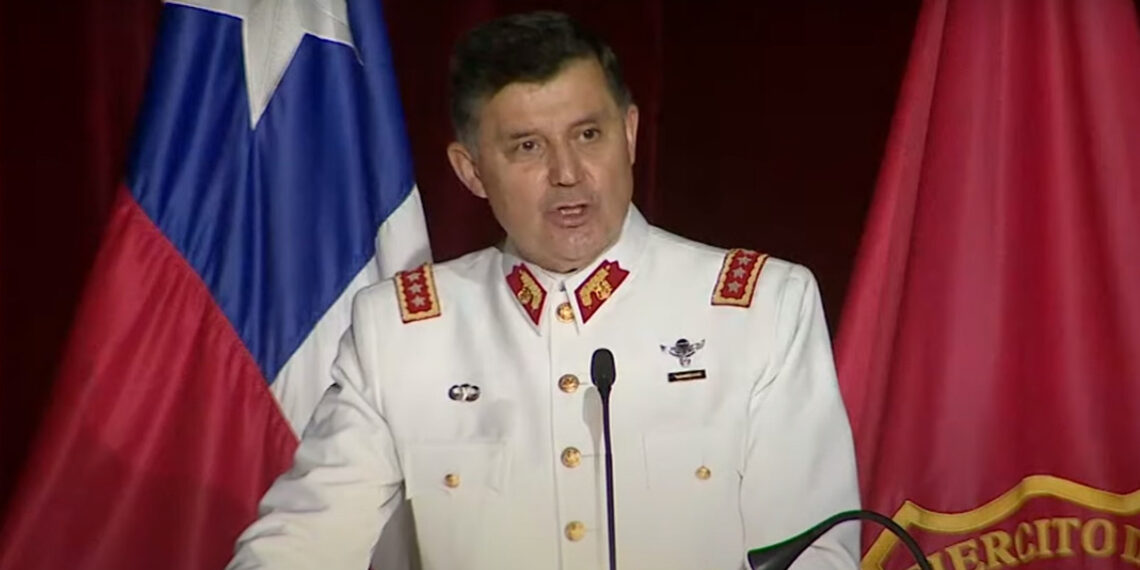
Martinez was charged with defrauding the military of $44 million and for allegedly using institutional travel funds for his own and his wife's benefit. Judge Romy Rutherford has been investigating the fraud case in the Army since 2011 and she questioned, in particular, eight trips carried out by Martinez while on active duty, during the years 2011-2017; on three of the trips accompanied by his wife. He was placed in preventive detention for three weeks. On April 5, 2022, the Military Tribunal dismissed the prosecution against him.
The decision of the Military Tribunal to dismiss Judge Rutherford's prosecution was a divided one of three judges against two. The majority accepted the defense's argument that the amount of money in the fraud had not been clearly established, that the alleged trips were subject to a statute of limitations and that Martinez had returned some of the money. Now the Council of the Defense of the State (CDE -- a group of 12 lawyers appointed by the President) will have to decide whether to appeal to the Chilean Supreme Court to overturn the Military Tribunal's decision.
Subscribe to:
Posts (Atom)